
Hidden Spaces to Organize: The Hidden Zone No One Talks About
Bring calm back to your home by tackling the hidden spaces to organize – under-sink cabinets, linen closets, and junk drawers that quietly collect clutter.
In this post we’ll explore why these hidden zones matter. We’ll walk you through how to tackle them gently but effectively. And we’ll share how bringing order to them can ripple out into the rest of your home and your well-being.
Why the hidden spaces matter
You may ask: why bother with spaces no one sees? Here’s why.
First: these zones are weighty. Even though we rarely give them proper attention, they carry emotional and physical clutter. Items that “we’ll deal with someday,” things we’re holding onto just in case, or things we never quite put away. Things we keep because we hope for a “future version of ourselves” sometimes lead to guilt and extra burden.
Second: they affect how you feel. A cabinet you avoid because it’s messy, or a drawer you dread opening – it’s like a small leak of stress in your home. Bringing these spaces under control has a surprising benefit on your mental clarity. One article noted that when we reduce visual clutter and unseen mess, we improve our ability to focus and relax.
Third: they give big return for small effort. Often when you focus on one of these less glamorous spots, you see immediate improvement. You don’t need to remodel the whole house. You just need to shine a little light, decide what stays and what goes, and give things a proper home. The result? A smoother flow when you move through your day.
So while we love glamorous “pantry reveal” posts and polished shelving systems, let’s also honor the hidden spaces. Because when they work, the rest of the home feels lighter.
Three common “hidden zones” you probably overlook
Let’s take a look at three of the most common hidden zones in homes and how they typically fall into disrepair.
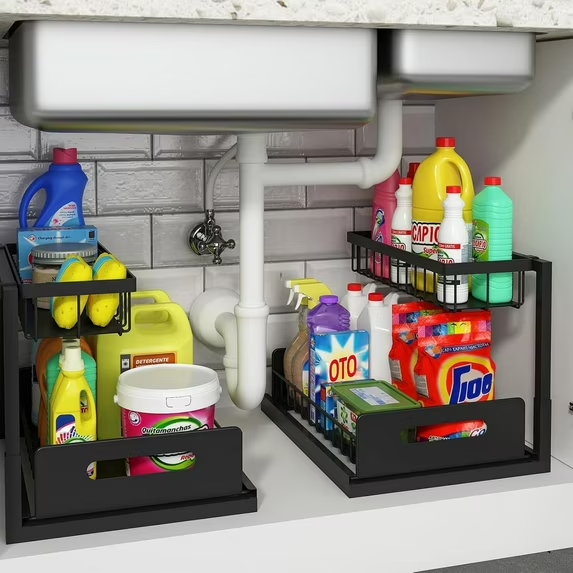
Under-the-sink and utility cabinets
That cabinet beneath the bathroom sink or in the kitchen has good intentions. It’s meant for cleaning supplies, extra toiletries, maybe seasonal items. But over time it becomes a catch-all. You shove in expired bottles, random towels, maybe that gift-wrap leftover roll.
Because you rarely open the door, you don’t see what’s piled up until you need something. Then you feel squeezed in. So this becomes a great first target: it’s often small, contained, and surprisingly impactful when it’s cleaned out.

Linen closets or “extra linens” shelves
Sheets, blankets, pillows. Twice as many towels as you need. The “just in case” items that accumulate dust. According to professionals, linen closets often grow beyond necessary and become heavy with unused or past-prime items.
You might have a linen cabinet that you pass by daily yet never quite open. Cleaning and organizing that space gives you a sense of calm – even if you don’t display it.

Junk drawers and miscellaneous storage
Ah yes, the famous junk drawer. That front-of-mind “drawer” in the kitchen or at the desk that holds everything from expired phone chargers to odd screws to forgotten receipts. Experts highlight that cords, small electronics, “someday” items are major clutter culprits.
Because these drawers seem so innocuous, they quietly hamper our home rhythm – when we can’t find what we need, when things pile up, when opening it feels like a chore.

A gentle process to bring order
Now to the good part: how to actually organize these hidden zones in a way that feels pleasant, manageable and lasting. I like to think of it as three phases: Clear, Corral, Create.
Phase 1: Clear
Pick your space. Just one. It might be under the sink, maybe a linen shelf, maybe a drawer. Set aside a block of time – 30 minutes to one hour. Pull everything out of that space. It sounds obvious, but the power of seeing what you really have is game-changing. This aligns with the idea “take everything out of the space” from organizing blogs.
As you pull things out, ask two key questions for each item:
“Do I use this?”
“Does it belong here?”
If either answer is “no,” move the item into a ‘consider’ pile. For example, expired cleaning supplies go straight to recycling/disposal. Mismatched sheets get evaluated. Random cords you don’t recognize? Maybe they go. A professional organizing piece says: ask whether the item represents a version of yourself that doesn’t exist today. If so: time to let it go.
Once you’ve removed everything, clean the empty space – wipe down shelves, vacuum the base, perhaps add a fresh liner or basket if it helps.
Phase 2: Corral
Now you’re working with a clean slate. First map out what you’re keeping. Group like items together. For the under-sink cabinet: all cleaning sprays in one basket, drawer liners in another, extra dish soap maybe in a bin. For linen closet: sheets together, pillowcases together, blankets separately. For a drawer: group chargers, tools, manuals, and so on. The “put like items together” step is core.
Use containers, baskets or bins if helpful. Choose ones that you’ll actually use – not just the prettiest. Transparent boxes or labelled bins work so you can see what’s inside without rummaging. One design-forward tip: hidden storage ideas that blend into walls and become invisible help reduce visual noise.
Also: make sure everything has a home. If you keep items without a home, they’ll slip into the “out of sight, out of mind” trap. One principle: everything needs a home.
Phase 3: Create the system
This is where you build the habit. A system does three things:
- Makes returning items easy.
- Makes finding them quick.
- Requires minimal maintenance.
Here are some guidelines:
- Use clear or labelled containers so you don’t wonder what’s inside.
- Leave some empty space or flexibility so the system doesn’t feel rigid or break down immediately.
- Place frequently used items at eye level or most accessible. Use lower or higher shelves for less-used items.
- Establish a short routine: once a month glance into the zone and reset items.
- If your space feels cramped, ask: can something be stored elsewhere? Does this item belong in a different zone entirely?
One effective habit: after you finish using something, return it to its home straight away. That five-minute nightly tidy helps prevent this zone from devolving again.
When you finish, you’ll notice three benefits
You’ll feel calmer
Walking past a shelf or opening a cabinet and knowing there’s order underneath gives a small but meaningful sense of peace. Your brain doesn’t register that tiny stress each time you pass the messy zone – that relief adds up.
You’ll spend less time hunting
When everything has a home you’ll stop searching, rummaging, or just settling for “it’ll be here somewhere.” That saved time means more mental bandwidth for the things you love rather than the things you tolerate.
You’ll maintain momentum
Once you conquer one of the hidden zones, the rest of the house usually follows. You’ll pick another spot, maybe a corner of the garage, maybe a bookshelf, and apply the same process. Each victory builds confidence. You’ll think: “Hey I can do this,” and you will.
Tips to make it feel natural and sustainable
Set a timer. If one of these zones feels overwhelming, give yourself 20 minutes and stop when the timer goes off. You’ve still made progress.
Work with a friend or family member. Having someone help you sort or just chat while you declutter makes the process less lonely and more fun.
Celebrate the small wins. Maybe you say to yourself: “I eliminated two grocery bags’ worth of items from under the sink.” That matters.
Be gentle with yourself. If you find sentimental items, you don’t have to purge them all. Just decide where they live and whether they are in the right place instead of in random storage.
Revisit the space. Every 3-6 months glance in and ask: is this still working? Our lives change and so should our storage.
Choose beautiful containers if they bring you joy. If you’re going to see them, you might as well like them. But don’t wait for “perfect” – functional is awesome.
Final thoughts
Hidden zones don’t have to be burdens. They can be quiet supporters of our day-to-day life. When they’re messy, they whisper “I’ll deal with this later” every time we walk by. When they’re organized, they fade into the background and let the spaces we do live in shine.
If you commit to one of these zones, clear it, corral it, create a system, you’ll feel something shift. You’ll feel a little more calm. You’ll have a little more breathing room in your home – and in your mind.
So pick your zone. One cabinet. One shelf. One drawer. Let’s bring it to life. Then move on. Keep going. Your home’s quieter corners matter – and they deserve to work for you, not against you.
Here’s to hidden spaces that serve you silently, beautifully, and well.
Ready to Get Organized?
Don’t leave without your FREE Sports Equipment Organization Planner.
It’s the perfect companion to this guide and will help you put these ideas into action.
Need help taking the next step?
Work with a professional organizer
You don’t have to tackle this alone. Get a custom plan, friendly accountability, and systems that fit your family.

I am a detail-oriented mom of 3 who specializes in helping families organize and declutter their spaces.


You May Also Like

How to Organize Basement: Tips for Finished, Unfinished, and Storage Spaces
